
Non-Surgical Treatments, Delivered in Your Own Home
A complete guide to every treatment Lipo Freeze provides — how each one works, who it suits, what a session involves and what to expect afterwards.
The Full Range of Lipo Freeze Treatments
Lipo Freeze is a mobile aesthetic service. Every treatment described here is delivered by a qualified consultant who travels to your home, sets up professional-grade equipment in a room of your choosing, and works to the same clinical protocols that would apply in a treatment room. We cover England, Scotland and Wales, and there is no additional charge for travel however far the consultant has to drive.
The treatments fall into four families. Body contouring deals with localised pockets of fat and the muscle beneath them. Skin tightening and facial rejuvenation works on collagen, laxity and texture. Blemish removal handles the small superficial marks that accumulate over a lifetime. Intimate and pelvic health covers pelvic floor strength, bladder control and vaginal tissue quality. Underneath all four sits the assessment process, which decides which of them if any is genuinely appropriate for you.
Each entry below explains what the technology does, which areas it treats, what a session feels like, how many sessions are needed, and how long results take and last. Where a treatment is unsuitable for certain people, that is stated plainly. One point applies universally. Individual results vary: two people of similar age and build, treated identically, can respond differently, because bodies differ in metabolism, lymphatic efficiency and skin quality. What follows describes typical and expected outcomes — not a promise, and never a cure.
How a Lipo Freeze Treatment Journey Works
The process is deliberately unhurried at the front end. Most people who contact us know what bothers them but not which technology addresses it, and sorting that out takes a conversation.
The initial enquiry
The first contact is a discussion about what you would like to change and what you have already tried. Somebody who has held a stable weight for two years and cannot shift a pocket of fat below the navel is a very different case from somebody who has recently gained weight across the whole torso — and for the second, the honest answer may be that no contouring device is the right starting point.
The free consultation
The consultation is carried out at no charge and reviews your medical history, current medication, previous procedures and any condition that rules a treatment in or out. It also covers what is realistically achievable in the area concerned. Lipo Freeze consultants are trained to decline treatment where it is not appropriate, and they do.
Assessment and the tailored plan
Assessment is hands-on. For fat reduction the consultant needs to feel where the fat actually sits; for skin treatments, laxity, thickness and sun damage are assessed by hand. The resulting plan specifies which treatment, which areas, how many sessions and at what spacing.
Treatment day
The consultant arrives with everything needed, sets up, re-confirms the plan and answers any questions that have surfaced since. You are entitled to change your mind at that point. Sessions run from seconds per blemish for cryotherapy to around an hour for a full-face treatment, and you will know in advance how long to set aside.
Aftercare and follow-up
Aftercare instructions are given before the consultant leaves, and follow-up is included as standard rather than sold as an extra. For treatments that work gradually — which is most of them — the meaningful assessment happens weeks later, not on the day. How progress is reviewed over time is covered on the results and timelines page.
Home visits at no extra cost. Consultants travel anywhere in England, Scotland and Wales without a travel charge, and the consultation, tailored plan, follow-up and aftercare are all included.
Body Contouring and Fat Reduction
Three treatments sit in this family and they do different jobs. Fat freezing removes fat cells from broad, pinchable areas; fat dissolving injections remove them from small or awkward areas an applicator cannot grip; body toning builds the muscle underneath while also reducing fat.
Fat Freezing (Cryolipolysis)
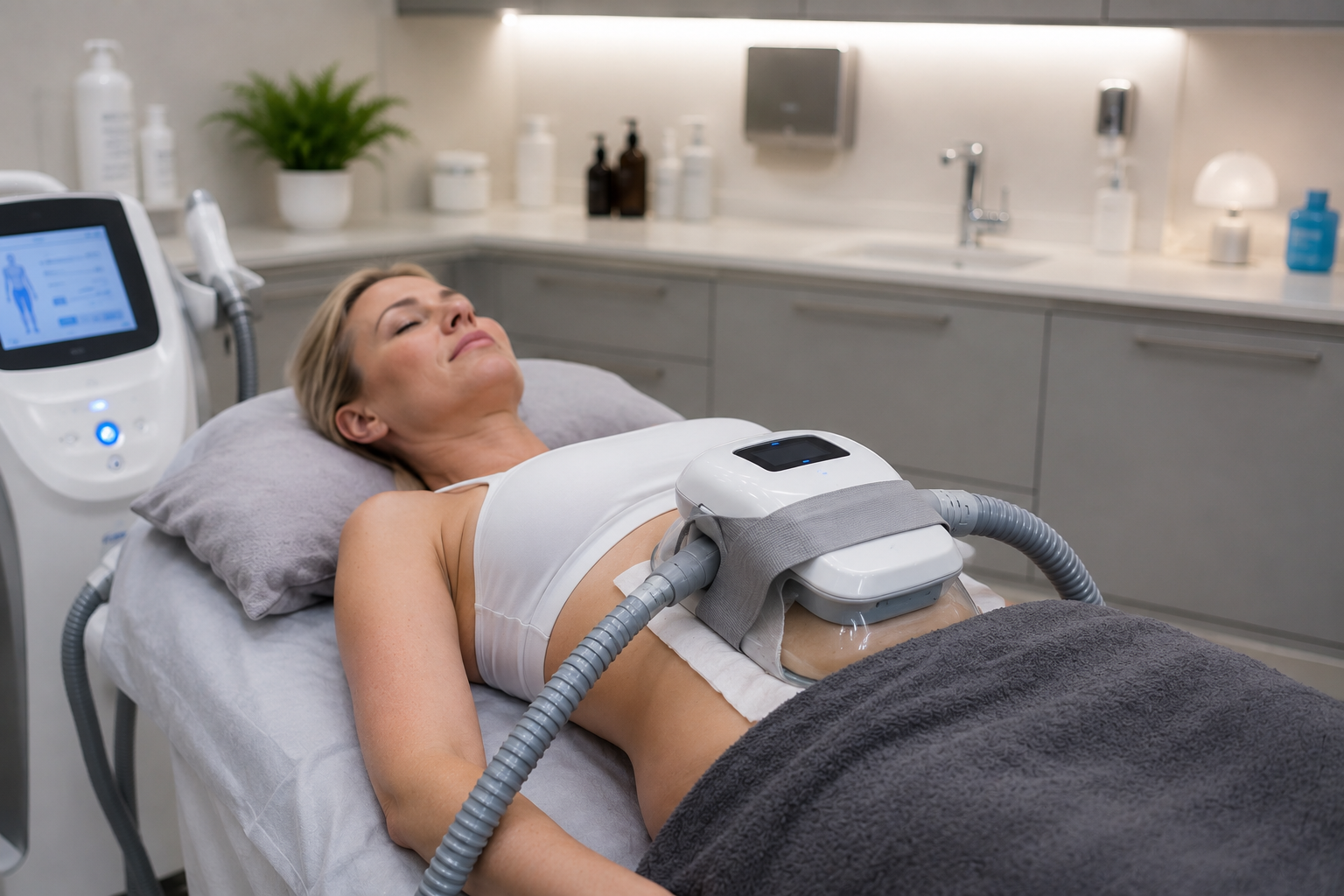
Fat freezing targets pockets of stubborn fat that have resisted diet and exercise. It rests on one observation: fat cells are more sensitive to cold than the skin, muscle and nerve tissue around them, which creates a window in which fat can be cooled to the point of injury while neighbouring tissue is left unharmed.
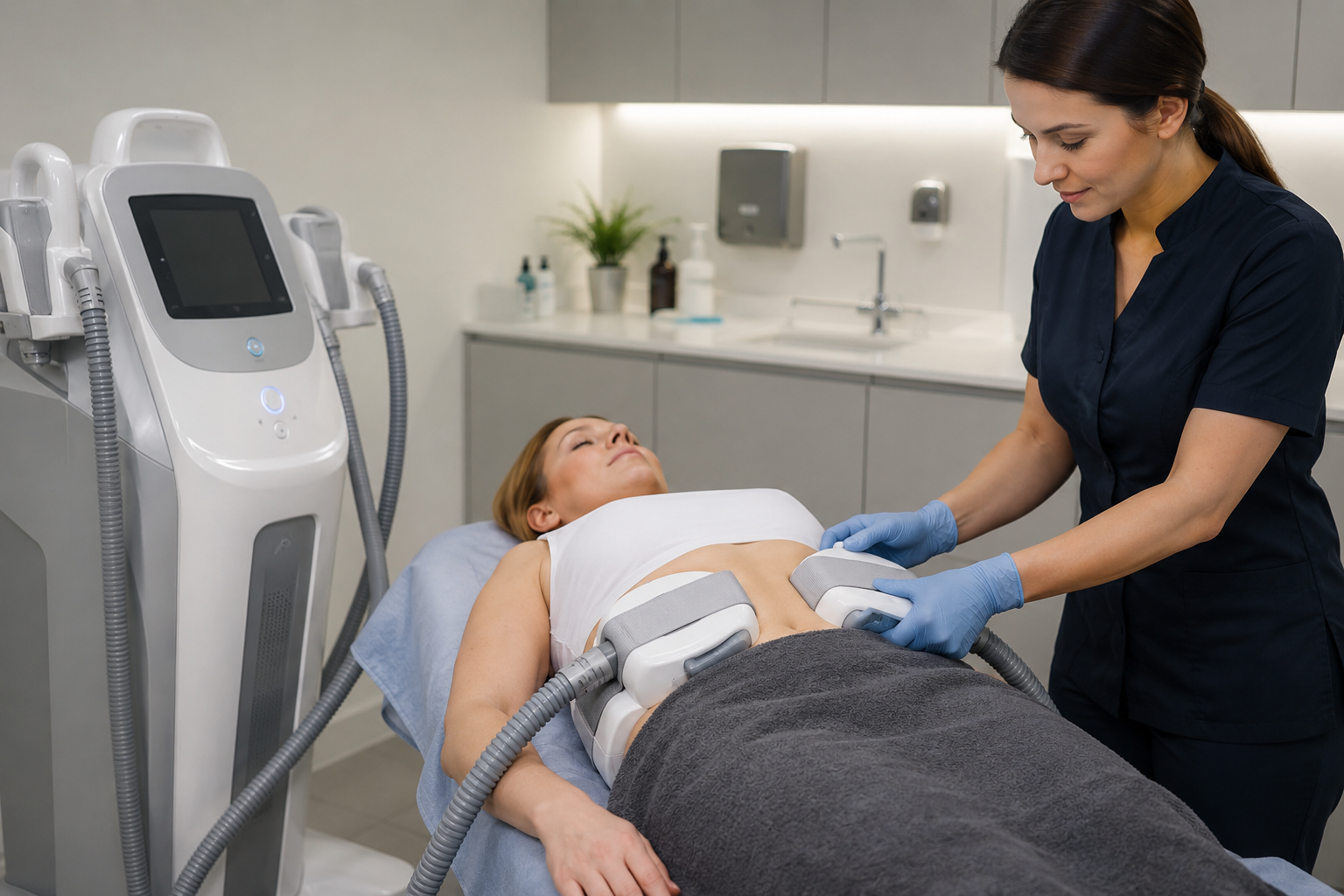
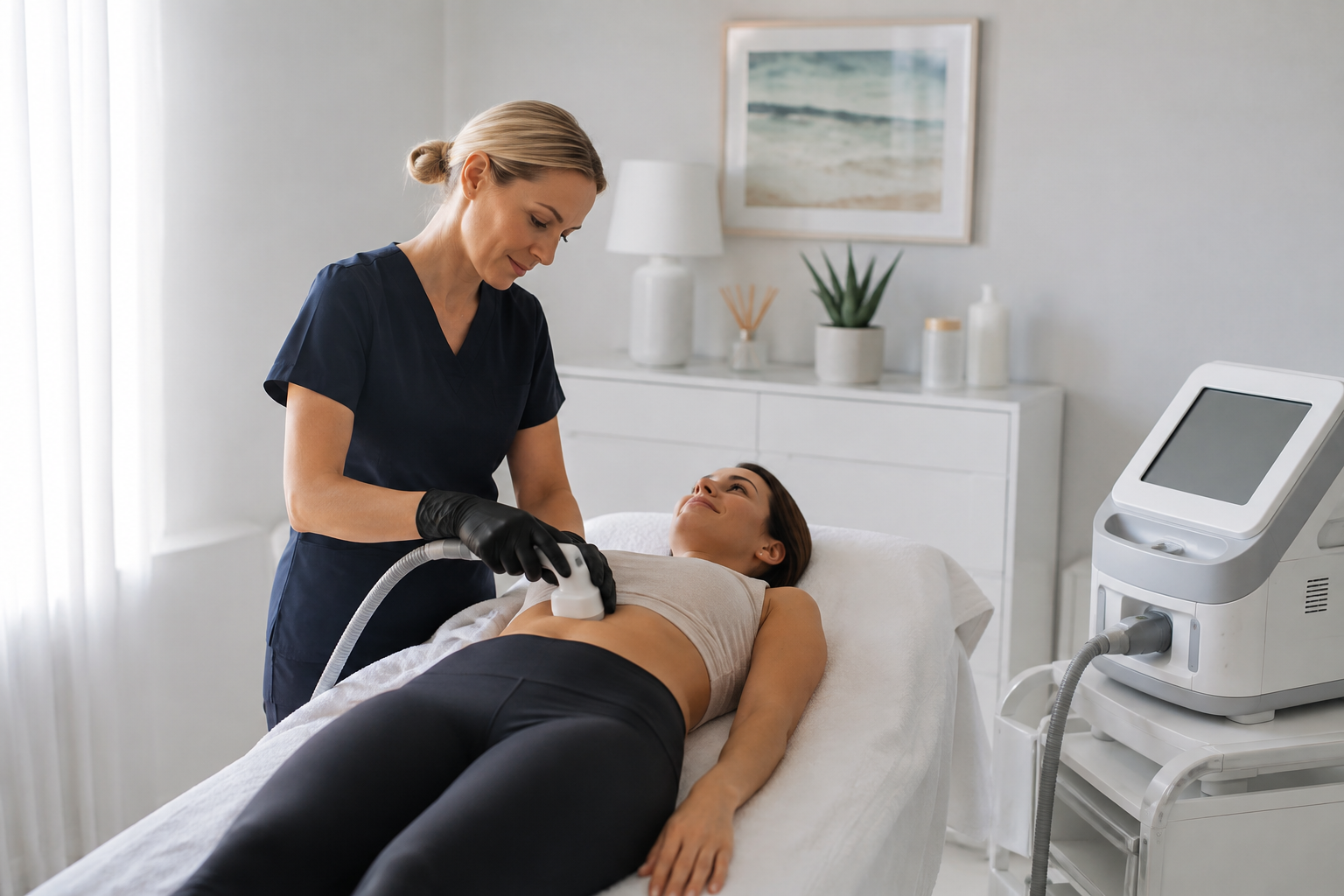
A protective gel pad is placed over the area and a cooling applicator draws the tissue into an applicator cup, holding it there while the temperature is brought down. The cold triggers apoptosis in the fat cells — a controlled process of cell death rather than a rupture — and the lymphatic system clears them over the following weeks, which is why the change appears gradually. There are no needles, no anaesthetic and no recovery period.
The areas most commonly treated are the stomach and love handles, followed by the inner and outer thighs, arms, lower and upper back, and under the chin. What they have in common is that the fat can be drawn into an applicator; anywhere the device cannot grip is not a candidate.
The first minutes involve intense cold and a strong pulling sensation as tissue is drawn into the cup, settling as the area numbs. Afterwards the area is typically cold, firm and slightly reddened, and normal activity resumes immediately.
Most areas need one to three sessions. Visible improvement typically begins at three to four weeks, with optimal results at eight to twelve. The technology is FDA-cleared. Because destroyed fat cells do not regenerate the reduction is lasting, though remaining cells can still enlarge if weight rises, so a stable weight protects the result.
It suits people already close to their ideal weight with localised bulges out of proportion to the rest of the body. It is not suitable for anyone with a cold-related condition such as Raynaud's, cold urticaria or cryoglobulinaemia; a hernia at or near the site; pregnancy or breastfeeding; excessive loose skin; or significant overweight, where a weight-loss intervention is the appropriate route.
Fat Dissolving Injections
These use deoxycholic acid injected directly into a fat deposit. The acid breaks down the membranes of the fat cells it contacts, releasing their contents for the lymphatic system to clear. The mechanism is chemical rather than thermal, and delivered into the fat rather than across the surface.
That is why the treatment exists alongside fat freezing: an applicator needs enough tissue to grip, and a needle does not. Small, firm or awkwardly positioned deposits — under the chin, along the jawline, in the jowls, around the knees — can be treated by injection where a cooling cup could get no purchase. Larger zones including the arms, abdomen, flanks and thighs can also be treated, usually where a contour needs refining rather than a broad area reducing.
It is not a weight-loss treatment and is not appropriate for obesity. It is a tool for targeted areas of fat in people whose overall weight is otherwise stable.
Injection feels like mild stinging or warming. Afterwards, swelling, tenderness and redness for a few days are normal signs the process is under way rather than complications, though people often leave clear days before a social event. Multiple sessions are typically needed, spaced a few weeks apart. Results are permanent in that the destroyed cells are gone, conditional on maintenance: remaining fat cells can still expand, so a healthy diet is required for the improvement to hold.
Body Toning (HIFEM)
Body toning uses high-intensity focused electromagnetic energy to induce contractions beyond what voluntary effort can produce. During ordinary exercise a person recruits roughly 35 to 40 per cent of the fibres in a working muscle; HIFEM energy brings close to 100 per cent into play, producing supramaximal contractions.
A 30-minute session delivers up to 20,000 of them. The muscle responds by remodelling and building, and the metabolic demand also drives fat reduction in the area — which is why this addresses both tissue types at once. Published figures report up to 19 per cent fat reduction and up to 16 per cent increase in muscle mass, with visible results possible within three weeks.
Treated areas are the abdomen, buttocks, hips and love handles, arms including biceps and triceps, thighs across the front, back and outer aspects, and calves. The same effect is also applied to diastasis recti — the abdominal separation that can follow pregnancy — and as support for injury repair where a muscle group has weakened.
The sensation is unmistakable but not painful: strong rhythmic contraction with intermittent tapping phases that reduce soreness afterwards. You stay still while the applicator works, and afterwards many people describe a feeling comparable to the day after a hard gym session, confined to the treated muscle.
The protocol is at least six sessions within two weeks, leaving two or more days between treatments for the muscle to rebuild — six appointments in a fortnight, which is a considerable burden when each involves travelling to a clinic.
Skin Tightening and Facial Rejuvenation
Ageing skin loses collagen and elastin, and loses them in the deeper layers first. Creams work at the surface; the treatments here work at depth, using ultrasound or radiofrequency to prompt the body to manufacture new collagen of its own. That is why they work over months rather than days — you are waiting on a biological process.
HIFU Non-Surgical Facelift
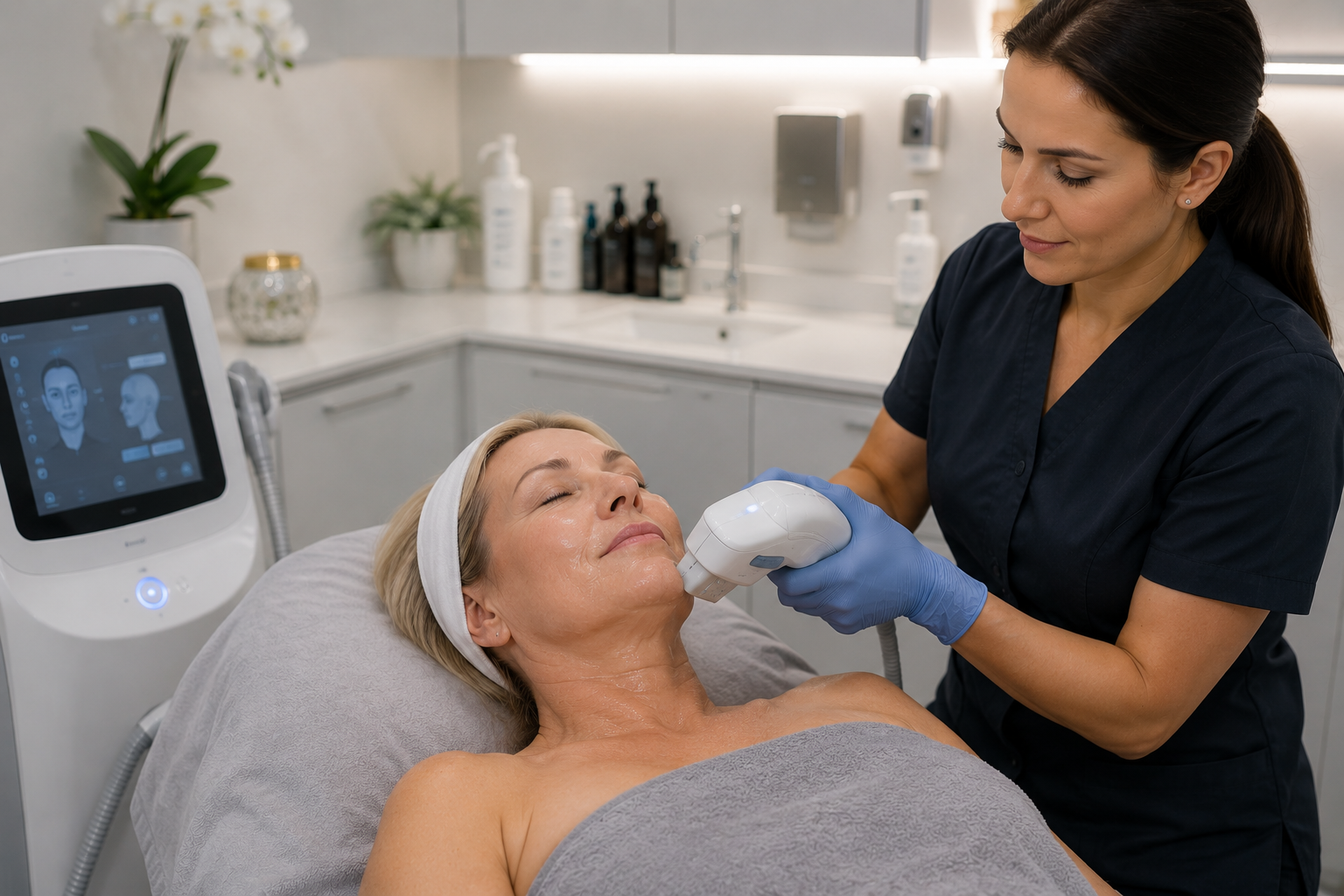
HIFU stands for High-Intensity Focused Ultrasound. The device concentrates ultrasound energy at a precise depth beneath the surface, producing small points of controlled thermal injury in the deeper layers while leaving the surface intact. Those points trigger the wound-healing response, and that response builds collagen.
Depth is what distinguishes it: HIFU reaches the same foundational tissue layers a surgeon targets, without incisions, needles, fillers or toxins. Nothing is injected — the change comes entirely from the tissue's own response.
Treatment is delivered with a handheld device emitting concentrated ultrasound pulses along mapped lines, felt as brief warmth or tingling deeper than the surface. Sessions run 30 to 60 minutes depending on how many areas are covered, and the areas treated include the forehead, brow line, cheeks, jawline, chin, neck and décolletage.
Some tightening is usually noticeable immediately, as existing collagen fibres contract under heat, but that is not the main event: improvement continues over three to six months as new collagen forms and matures. There is no recovery period, and any slight redness or mild tenderness resolves within hours.
Advanced RF Microneedling
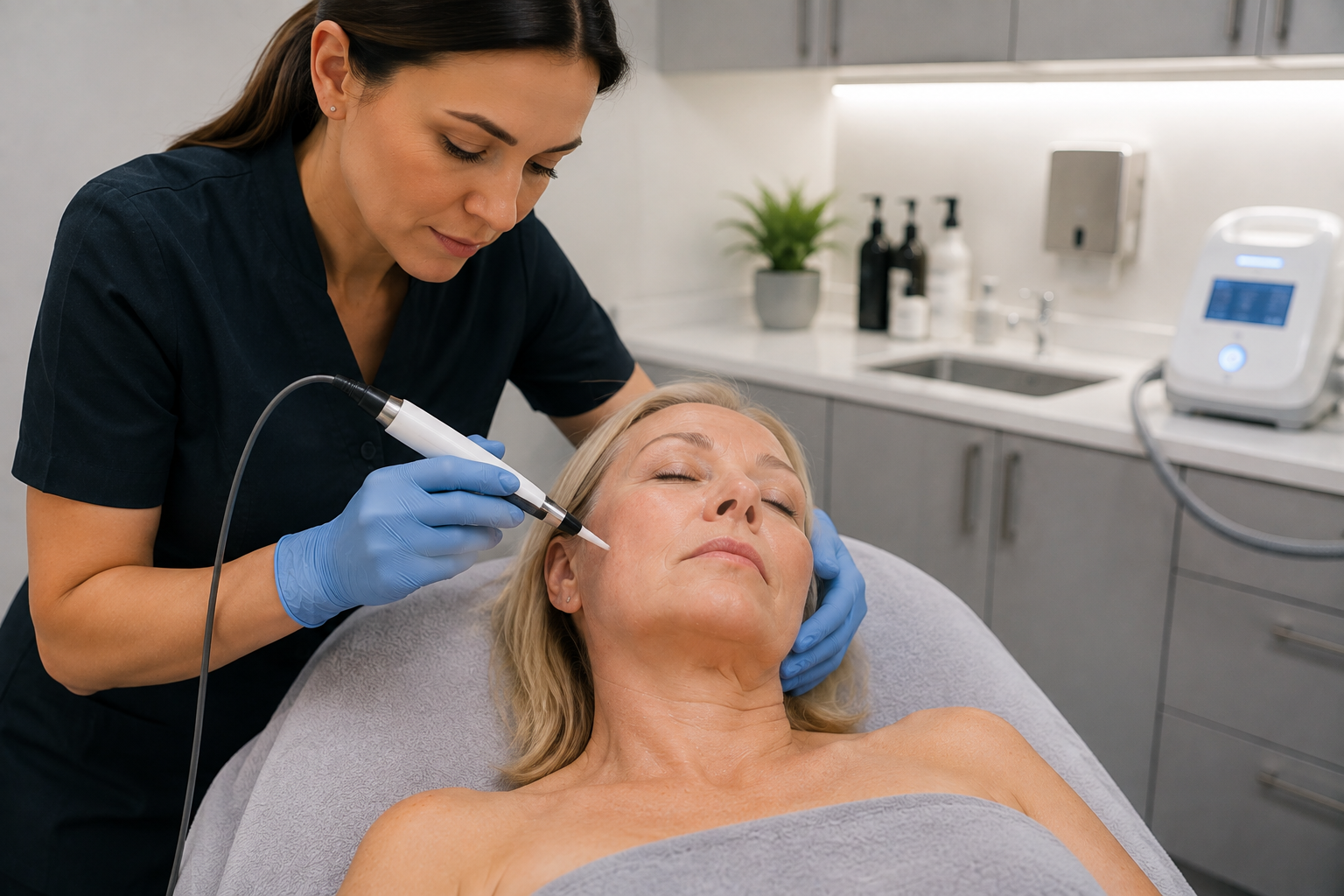
This combines two mechanisms in one pass. Fine microneedles create controlled micro-injuries that stimulate the natural healing and collagen-building response. Radiofrequency energy is then delivered through those needles into deeper tissue, heating existing collagen fibres so they contract, and prompting regeneration around them. For readers considering an RF microneedling option, the Lipo Freeze 2U Morpheus8 Prices page provides further information about pricing.
The combination works on the surface quality of the skin and its underlying structure at once. It is used for fine lines and wrinkles, sagging skin, mild acne scarring, enlarged pores, stretch marks, uneven texture and general laxity — and is not limited to the face, being equally applicable to the neck and to body areas that have lost tone.
A topical numbing cream is applied first, and most people describe a warm prickling. Sessions usually take under an hour including numbing. Afterwards the skin is red and slightly swollen, comparable to mild sunburn, settling over a day or two — a short but real period of visible recovery, unlike HIFU. It is recommended as a course of three sessions, because the collagen response is cumulative and each pass builds on the remodelling triggered by the last.
Signature Skin Lift
The Signature Skin Lift pairs a skin tightening treatment with HIFU to produce a non-surgical facelift result within a single planned protocol rather than as two separately scheduled treatments. It is non-invasive throughout and available for facial and body areas alike, with the visible outcome developing as collagen is laid down over the following weeks.
Skin Blemish Removal with CryoPen Cryotherapy
CryoPen cryotherapy addresses the small marks and growths that accumulate on skin over the years, delivering a controlled jet of nitrous oxide onto the blemish through a pen-like tip. The precision is the point: the freeze destroys the unwanted tissue while leaving surrounding healthy skin unaffected, which is what allows it to be used on the face and other visible areas.
Each blemish takes seconds to treat. The sensation is a sharp cold stinging that passes quickly, with no anaesthetic and no injections. Over the following one to two weeks the frozen tissue blisters, crusts and sheds, revealing new skin underneath, and some clients need a second treatment where a lesion proves thicker than it appeared. Consultation and treatment are combined into a single appointment. The device is FDA-approved and safe for age-appropriate children. For those considering treatment, the current Lipo Freeze 2U CryoPen Prices provide further information about the cost of CryoPen treatment.
What can be treated
- Skin tags — small soft growths attached by a narrow stalk, most common where skin rubs against skin or clothing, such as the neck and underarms.
- Warts — rough raised growths caused by a viral infection of the outer skin layer, frequently on hands and fingers.
- Verrucae — warts on the soles of the feet, pushed flat by body weight, often hardened and uncomfortable when walking.
- Age spots — flat patches of increased pigmentation on areas with a long history of light exposure, typically the backs of the hands and the face.
- Sun damage — the broader pattern of uneven pigmentation left by cumulative ultraviolet exposure.
- Milia — tiny firm white bumps formed where keratin becomes trapped just beneath the surface, commonly around the eyes and resistant to squeezing.
- Cherry angiomas — small bright red raised spots of clustered blood vessels, which tend to increase in number with age and appear most often on the trunk.
- Benign moles — non-cancerous pigmented growths, treated only where their benign nature is not in question.
- Seborrhoeic keratosis — waxy, slightly raised growths with a stuck-on appearance, harmless but often disliked cosmetically.
- Actinic keratosis — rough scaly patches arising on sun-exposed skin, treated on the same conservative basis as moles.
- Dermatofibroma — a firm small nodule within the skin, frequently on the legs, which may dimple inward when pinched.
An important boundary. Cryotherapy is a cosmetic treatment for lesions already established as harmless. Any lesion that is changing in size, shape or colour, bleeding or itching should be assessed by a doctor first, and a Lipo Freeze consultant will decline to treat where there is uncertainty about a mark.
Intimate and Pelvic Health
These are the treatments people find hardest to ask about. Incontinence and post-childbirth changes are common and rarely discussed, and the reluctance to raise them in a public clinic is one of the clearest reasons a home service exists. Female consultants are available on request.
Incontinence Treatment
This uses electromagnetic energy directed at the deep muscles of the pelvic floor, causing them to contract repeatedly — an effect comparable to thousands of Kegel exercises in one session, reaching fibres most people struggle to isolate voluntarily. Weak pelvic floor muscles are the common factor behind several distinct problems, which is why one treatment addresses conditions that appear unrelated.
It is used for stress incontinence — leakage during coughing, sneezing, laughing or exercise — as well as overactive bladder, faecal incontinence and erectile dysfunction, and is suitable for both men and women. For men specifically interested in pelvic-floor treatment for erectile dysfunction, the Lipo Freeze 2U ED Treatment page explains the treatment approach in more detail.
From the client's side it could hardly be simpler. You remain fully clothed and sit for the session while the device works; loose clothing is recommended. Sessions last 30 minutes, the sensation is one of strong internal contraction rather than pain, and the treatment is non-invasive, painless and free of downtime.
The recommended course is six to eight treatments. Improvements are often noticed in as little as three weeks and tend to continue over the following couple of weeks. Because the change is structural, results can last for years, particularly where supported by ongoing pelvic floor exercise. The devices used are FDA-approved.
Vaginal Tightening
This uses HIFU to heat tissue internally at a controlled depth, stimulating production of collagen and elastin in the vaginal wall. It is the same underlying principle as facial HIFU, applied to different tissue and delivered by a specialised wand.
The process runs in stages: a consultation evaluating medical history and goals; preparation with a topical comfort cream; the treatment session itself, with focused energy delivered by the HIFU wand, taking approximately 30 minutes; a collagen activation phase; recovery with minimal downtime; and results developing progressively over the following weeks.
Reported benefits are increased tightness and elasticity, improved sexual satisfaction, reduced vaginal dryness, alleviation of mild urinary incontinence, relief from painful intercourse, and the improvement in confidence that tends to accompany these.
It suits women experiencing looseness following childbirth, mild urinary incontinence, vaginal dryness, discomfort during intercourse, or collagen loss from ageing and menopause. Many benefit from three treatments spaced four to six weeks apart, and results generally last from several months to over a year. Aftercare is limited: avoid sexual activity for 24 to 48 hours and maintain good hydration.
Combining Treatments
Several of these treatments do complementary rather than overlapping work, and a plan often involves more than one. The logic is consistent: each technology acts on a particular tissue, so a result involving more than one tissue needs more than one technology.
Fat freezing with body toning
The most frequent pairing. Freezing removes fat cells from a pocket; toning builds the muscle beneath it. A flat, defined abdomen is the product of both a thin fat layer and a strong muscle wall, so treating only one leaves the other unaddressed, and because they act on different tissue the improvements are additive.
Fat freezing with fat dissolving injections
Complementary in geography rather than mechanism. Freezing handles broad pinchable areas; injections reach deposits no applicator can grip. A plan for the chin and jawline may therefore use freezing under the chin, where there is enough tissue to draw in, and injections along the jawline and jowls, where there is not.
HIFU with Advanced RF Microneedling
The standard pairing for facial rejuvenation, and the reason is depth. HIFU acts on the deep foundational layers, producing lift from below; RF microneedling acts on the superficial and mid layers, improving texture, fine lines, pore size and scarring. Lifting a face whose surface is still uneven leaves half the job undone, and the reverse is equally true.
Body contouring with skin tightening
Where fat is reduced in an area whose skin has already lost tone, a skin tightening treatment helps the skin adapt to the new contour. This is a matter of judgement rather than routine — where loose skin is excessive, no non-surgical treatment is appropriate and the honest answer is a surgical referral.
Incontinence treatment with vaginal tightening
These address adjacent concerns by different routes: one strengthens pelvic floor muscle, the other improves the elasticity of vaginal tissue. Women whose symptoms after childbirth or menopause span both are often better served by addressing both.
Where combinations are planned, sequencing matters as much as selection — treatments that provoke a healing response are not scheduled onto the same area on the same day. How combined plans progress is illustrated on the results and timelines page.
Suitability, Contraindications and the Assessment Process
Assessment answers two questions: is this treatment safe for this person, and is it likely to achieve what they want? A treatment that is safe but poorly matched to the goal is still the wrong recommendation.
Absolute contraindications for fat freezing
Fat freezing is ruled out entirely for anyone with a cold-related condition — Raynaud's phenomenon, cold urticaria or cryoglobulinaemia — because the treatment works by sustained cooling and these conditions cause abnormal reactions to cold. It is also ruled out where there is a hernia at or near the treatment site, since drawing tissue into an applicator over a weakened abdominal wall is not safe. Pregnancy and breastfeeding rule it out, as they do the other body treatments.
Where expectations rather than safety are the issue
Two groups are frequently disappointed by contouring treatments. The first is people carrying significant excess weight, for whom a weight-loss intervention is the appropriate starting point — these devices work on localised bulges, not overall body mass. The second is people whose main concern is loose skin rather than fat, since removing fat from beneath skin that has lost its elasticity can make the looseness more apparent.
The subcutaneous and visceral distinction
A firm, protruding abdomen is not always a problem any external device can address. Subcutaneous fat sits between skin and muscle and can be pinched between finger and thumb; visceral fat sits behind the abdominal wall around the organs and cannot. No applicator, injection or electromagnetic device reaches visceral fat, which responds to diet and activity instead. The pinch test at consultation establishes this, and it is a common reason a consultant advises against treatment.
Medical history, medication and timing
The consultation covers current medication, previous surgery in the area, implanted metal or electronic devices, skin conditions and healing history — any of which can change what is appropriate or require an adjusted protocol. Where there is genuine doubt, the consultant will ask you to check with your GP rather than making that judgement themselves. The reasoning behind this approach is set out on the page about why people choose Lipo Freeze.
What to Expect at a Home Appointment
People considering a home visit usually have practical questions rather than clinical ones.
The room and the space required
Any room in which you feel comfortable and have privacy will do — a bedroom, living room or spare room are all commonly used. What is needed is enough floor space for the consultant to set up and move around you, and a surface to lie on where the treatment requires it. There is no need to clear a room or rearrange furniture.
Power and access
A standard mains socket within reach of the treatment area is required, as the equipment runs on mains electricity. It also helps to mention anything affecting access in advance — stairs without a lift, restricted parking, a gate code or an entry system — since equipment is carried in.
Duration
Set aside more time than the treatment itself takes, particularly for a first appointment. Sessions run around 30 minutes for body toning, incontinence treatment and vaginal tightening, 30 to 60 minutes for HIFU, under an hour for RF microneedling including numbing, and seconds per blemish for cryotherapy — though that appointment includes the consultation. Fat freezing occupies a longer window per area, and you will be told the expected duration in advance.
What to wear
Loose, comfortable clothing is the general recommendation, and it is specifically advised for incontinence treatment, where you remain fully clothed throughout. For body treatments the consultant needs access to the area, so clothing that is easy to adjust is more practical than something fitted. For facial treatments, arrive without make-up where you can, or allow a few minutes at the start to remove it.
Privacy and who else is at home
Privacy is one of the main reasons people choose a home visit, and the arrangements are yours to set: you may have someone else present, or the room to yourself with the consultant. Consultants are used to working around household life — children, pets and interruptions are entirely normal and rarely disrupt a session.
Aftercare Across Treatment Types
Requirements differ between treatments, and your instructions will be specific to what you have had done. The general pattern: treatments relying on lymphatic clearance benefit from hydration and movement, while those relying on a healing response benefit from leaving the skin alone.
After fat freezing
Normal activity resumes immediately. The area may feel cold, firm, numb or tender for a period, and this settles on its own. Since destroyed cells are cleared by the lymphatic system, staying hydrated and reasonably active supports the process. The result appears across eight to twelve weeks, so avoid judging it too early.
After fat dissolving injections
Expect swelling, tenderness and redness for a few days — the expected response rather than a complication, though worth accounting for when planning. A healthy diet is a genuine part of aftercare here rather than general advice, since the permanence of the result depends on it.
After body toning
There is no downtime and you can return to normal activity straight away, including exercise, though mild soreness is common. The spacing rule is the important part: leave at least two days between sessions, because the recovery interval is when the muscle actually rebuilds.
After HIFU and RF microneedling
Following HIFU, slight redness or mild tenderness resolves within hours and there is no recovery period. RF microneedling leaves redness and slight swelling like mild sunburn for a day or two, during which the skin should be treated gently — avoid harsh actives and heavy make-up until it settles, and protect the area from sun exposure. Both continue working for months as collagen forms.
After CryoPen cryotherapy
The treated blemish blisters, crusts and sheds over one to two weeks, revealing new skin beneath. The crust should be left to come away on its own rather than picked, as interfering risks marking the skin. Where a lesion was thicker than it first appeared, a second treatment can be arranged once the area has fully healed.
After intimate and pelvic treatments
Incontinence treatment requires no downtime and no restrictions. After vaginal tightening, avoid sexual activity for 24 to 48 hours and maintain good hydration. Results develop over the following weeks in both cases, and continued pelvic floor exercise helps sustain the benefit of incontinence treatment long term.
Frequently Asked Questions
Is there really no extra charge for the home visit?
No. Consultants travel to clients anywhere in England, Scotland and Wales with no additional cost for travel, whether you are ten minutes away or several hours away. Treatment costs themselves are set out on the prices page.
Which treatment is right for me?
That is what the free consultation determines. As a rough guide: pinchable pockets of fat point towards fat freezing, small or awkward deposits towards fat dissolving injections, lack of muscle definition towards body toning, loss of firmness in the face towards HIFU, texture and scarring towards RF microneedling, and small skin growths towards cryotherapy.
Do any of these treatments hurt?
None requires anaesthetic beyond the topical numbing cream used for RF microneedling and the comfort cream used before vaginal tightening. Fat freezing involves intense cold and a strong pulling sensation initially, easing as the area numbs. Body toning produces powerful but painless contractions, HIFU brief warmth at depth, injections mild stinging, and cryotherapy a sharp cold sting lasting seconds.
How soon will I see results?
It depends on the treatment. Body toning can show results within three weeks. Fat freezing shows improvement at three to four weeks, with optimal results at eight to twelve. Incontinence treatment can improve symptoms in as little as three weeks. HIFU gives some immediate tightening, with continued improvement over three to six months. Individual response varies in every case.
Will the fat come back?
Fat cells destroyed by freezing or by dissolving injections do not regenerate — those cells are gone permanently. The cells that remain, however, retain the ability to expand if body weight increases, so a stable weight and a healthy diet are what protect the result.
Are these treatments suitable for men?
Yes. Fat freezing, fat dissolving injections, body toning, HIFU, RF microneedling and cryotherapy are all used by men and women alike, and the incontinence treatment is also suitable for men.
Can I have treatment while pregnant or breastfeeding?
No. Fat freezing is specifically contraindicated during pregnancy and breastfeeding, and the sensible course is to postpone aesthetic treatments generally until afterwards. Treatments aimed at post-pregnancy concerns, such as body toning for diastasis recti, are considered once you have recovered.
Is the equipment the same as a clinic would use?
Yes. The equipment used at home visits is professional grade and FDA-approved, and the clinical protocols followed are the same ones that apply in a treatment room. The team has over ten years of industry experience delivering treatments this way.
What if the consultation concludes I am not suitable?
Then you will be told so, and told why. Consultants decline treatment where the risk is inappropriate or the likely result would not meet the goal, and in some cases the honest recommendation is a different treatment, a different starting point such as weight management, or a referral for medical assessment.
Finding Out More
Everything on this page is intended to help you narrow down what you are looking for before speaking to anybody. Most people arrive at that answer somewhere between two options rather than one, which is a perfectly reasonable place to start.
If you would like to see how these treatments progress over time, the results and timelines page sets out what typically happens week by week, and an overview of the service as a whole is on the home page.
When you are ready to ask a question about suitability, about what a treatment would involve in your circumstances, or about whether any of this is appropriate for you at all the details for reaching the team are on the contact page, or you can speak to somebody on Lipo Freeze. Consultations are free, carry no obligation, and are as useful for finding out that a treatment is not right for you as for finding out that it is.